
Carat weight tells you how much a diamond weighs. It does not tell you how large it looks on the finger. Two diamonds at the same carat weight can look noticeably different in size depending on the shape, the cut proportions, and even the setting. If you want a stone that reads as large as possible for your budget, the shape decision matters more than most buyers realize before they start looking.
What “Spread” Actually Means
Spread refers to how much surface area is visible when a diamond is viewed face-up, which is how you actually see it on the finger. Some shapes carry a significant portion of their weight in the pavilion, the lower portion of the stone below the girdle, which means that weight is hidden inside the setting rather than contributing to the visible face of the stone. Other shapes spread that weight outward, maximizing what you see.
A stone with strong spread will look larger than its carat weight suggests. A stone with deep proportions may look smaller. This is why two diamonds with identical GIA certificates can look like different sizes sitting next to each other on a velvet tray.
Diamond Cuts Ranked by How Large They Appear on the Finger
The following ranking reflects typical face-up spread and elongation relative to carat weight. Individual stones vary, and proportions within each shape category matter, but this is a reliable starting framework.
1. Marquise. The most surface area per carat of any shape. The long, narrow silhouette with pointed tips creates a dramatic elongating effect on the finger. At the same carat weight, a marquise will consistently look larger face-up than any other shape.
2. Pear. The tapered teardrop shape combines the spread of an oval with a pointed tip that draws the eye outward. It elongates the finger and reads larger than its weight suggests, particularly in longer length-to-width ratios.
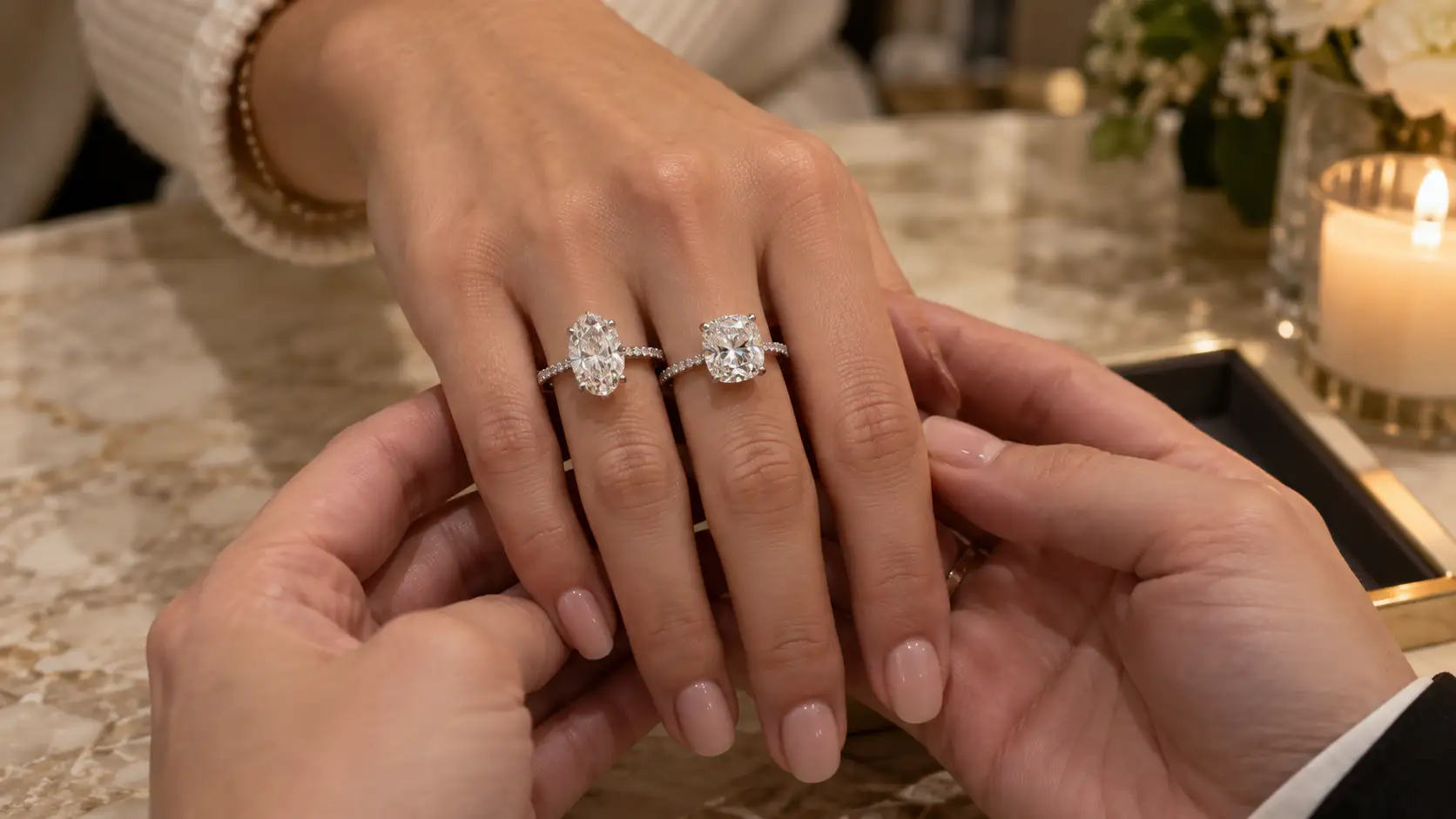
3. Oval. One of the most popular shapes at The Diamond Room right now, and for good reason. The oval spreads well, flatters virtually every finger type, and delivers a larger face-up appearance than a round brilliant at the same carat weight. It also tends to hide inclusions well and works beautifully across a range of settings.
4. Emerald. The large table and clean rectangular geometry of an emerald cut create an elongated, elegant presence on the finger. It reads larger than its weight because the open table maximizes visible surface area, though it requires higher clarity grades since inclusions are more visible in this cut than in brilliant shapes.
5. Round Brilliant. The most popular diamond shape overall, and a strong performer on visual size despite its symmetrical proportions. A well-cut round brilliant often looks larger face-up than deeper cuts at the same carat weight, and its light performance is unmatched.
6. Radiant. A beautiful cut with strong brilliance, but it tends to carry more weight in the pavilion than elongated shapes. This reduces its face-up spread relative to carat weight compared to ovals or marquise cuts at the same size.
7. Cushion. The deep cut and curved edges of a cushion tend to produce a smaller face-up appearance per carat than most other shapes. The trade is a warmer, softer look with strong light performance. If you love the cushion shape, a slightly higher carat weight or a well-chosen setting can compensate for the reduced spread.
What Else Affects How Large a Diamond Looks
Shape is the biggest variable, but it is not the only one. A few other factors compound or reduce visual size in meaningful ways.
Setting and band design. A slim band makes any center stone read larger by contrast. A hidden halo adds a ring of pavé diamonds beneath the center stone that increases the overall visual footprint without adding bulk to the face of the ring. These are two of the most effective tools for maximizing perceived size within a budget, and they are design decisions rather than stone decisions.
Prong placement. More discreet prongs allow more of the diamond’s surface to show. Four prongs typically expose more of the stone than six. Claw prongs that grip only the corners of the stone, rather than covering the sides, are another way to maximize what is visible.
Clarity and color. A cleaner stone with no visible inclusions or color tinting reads as crisper and more present on the finger. Distractions inside the stone pull the eye inward rather than allowing the face to read at full size.
Finger proportions. A 1.5 carat oval will read differently on a size 5 finger than on a size 8. This is one of the genuine advantages of trying stones on rather than evaluating them on a screen or a velvet tray. Scale relative to the hand matters, and it is difficult to predict without seeing it in person.
Why Trying Them On Changes Everything
Photographs and size charts only go so far. The difference between a marquise and a cushion at the same carat weight is something you feel immediately when both are on your finger, and it is rarely what buyers expect before they see it. Shape preference also tends to shift once stones are actually being worn rather than viewed in isolation.
At The Diamond Room, we pull multiple shapes at the same carat weight and let you try them on side by side. We also show you how setting choices interact with each shape to affect the overall look. If maximizing size within a budget is a priority, that conversation is one we have regularly and find genuinely useful for buyers who come in unsure where to start.
Our Diamond Buying Guide covers shape selection alongside the other 4Cs if you want to build context before your appointment. Our engagement rings page shows finished examples across a range of shapes and settings.
Book a private appointment in Austin or schedule in Dallas to see the shapes side by side in person. There is no right answer, only the one that looks and feels best on your hand.
Frequently Asked Questions
Which diamond shape looks the largest for its carat weight?
The marquise cut consistently looks the largest per carat due to its long, narrow silhouette and strong face-up spread. The pear and oval are close behind. All three elongate the finger and carry more of their weight in visible surface area rather than depth. If maximizing the appearance of size relative to carat weight is the primary goal, these three shapes are the strongest starting point.
Does an oval diamond look bigger than a round at the same carat weight?
Generally yes. An oval diamond typically has more face-up surface area than a round brilliant at the same carat weight because the elongated shape spreads the stone’s mass across a larger visible footprint. The difference is noticeable when the two shapes are placed side by side, and becomes even more apparent when worn on the finger.
Can the setting make a diamond look bigger?
Yes, significantly. A slim band makes the center stone appear larger by contrast. A hidden halo adds a ring of pavé diamonds beneath the center stone that extends its visual footprint. More discreet prong placement exposes more of the stone’s surface. These are design decisions that can effectively add perceived size without adding carat weight or cost to the center stone itself.
Why does a cushion cut look smaller than other shapes at the same carat weight?
Cushion cuts tend to carry more of their weight in the depth of the stone rather than the face-up surface. The rounded corners and deeper pavilion reduce the spread relative to carat weight compared to elongated shapes like ovals or marquise cuts. This does not make cushions a poor choice, but buyers who love the cushion shape and want to maximize visual size may want to consider going up slightly in carat weight or choosing a setting that enhances the stone’s presence.
How do I know which shape will look best on my hand?
The only reliable way to know is to try them on. Shape preference, finger length, and hand proportions all interact in ways that are genuinely difficult to predict from photographs or size charts. At The Diamond Room, we pull multiple shapes at the same carat weight during your appointment so you can see and feel the differences on your own hand before making any decisions.
