
An active lifestyle does not mean you have to compromise on your engagement ring. It does mean the shape and setting decisions matter more than most buyers initially realize. A ring that works beautifully in a showroom can create real problems for someone who works with their hands, trains regularly, or simply lives an active daily life. Here is how to think through the decision before you commit.
Why Shape Matters for Durability
Diamond durability in everyday wear comes down less to the size of the stone and more to its geometry. The vulnerability points on any diamond are its sharpest edges and corners. When a corner or point takes a direct impact, it can chip, and certain shapes are far more susceptible to this than others.
The shape of the stone also determines what kind of prong or setting protection is possible, which is the other half of the durability equation. A shape with no vulnerable corners gives you much more flexibility in setting design. A shape with delicate pointed tips requires specific prong styles to protect them adequately.
The Most Durable Diamond Shapes
- Round brilliant. The most durable diamond shape overall. The fully curved girdle means there are no corners or points to chip, and the symmetrical geometry distributes any impact evenly. If durability is the primary concern, round is the most forgiving choice in any setting style.
- Oval. Shares most of the durability advantages of the round, with the added benefit of a larger face-up appearance at the same carat weight. The elongated silhouette has no pointed tips, making it nearly as impact-resistant as a round. Ovals are currently one of the most popular choices at The Diamond Room for exactly this combination of reasons.
- Cushion. The gently rounded corners of a cushion cut make it meaningfully more durable than square or rectangular shapes with sharp corners. It sits slightly deeper than the previous two, which reduces face-up spread but adds protection. For buyers who love a softer, more vintage-inspired look, the cushion holds up well to daily wear.
Shapes That Require Extra Attention
The following shapes are genuinely beautiful and absolutely wearable for active people, but they require more intentional setting design to protect their vulnerable points.
- Marquise, pear, and heart cuts all have delicate pointed tips that are susceptible to chipping on impact. If you love any of these shapes, V-tip prongs or a partial bezel around the points are essential, not optional. The right setting handles this well, but it is a design conversation that needs to happen before the ring is built.
- Princess cuts have four true 90-degree corners that can chip if the ring takes a direct blow at the right angle. These sharp corners benefit significantly from corner prongs that cover and protect each tip.
- Emerald cuts are a different story from princess cuts. Rather than true 90-degree corners, emerald cuts have cut corners, which creates a flat edge that gives prongs a clean, stable surface to sit against. However, the emerald cut has eight corners that are all exposed without any setting covering and protecting them. That exposure makes prong placement and quality especially important for active wearers who choose this shape.
Setting Style Is Half the Equation
The shape of the stone sets the foundation, but the setting determines how well that stone is protected in real-world conditions. For active lifestyles, a few setting styles consistently outperform the rest.
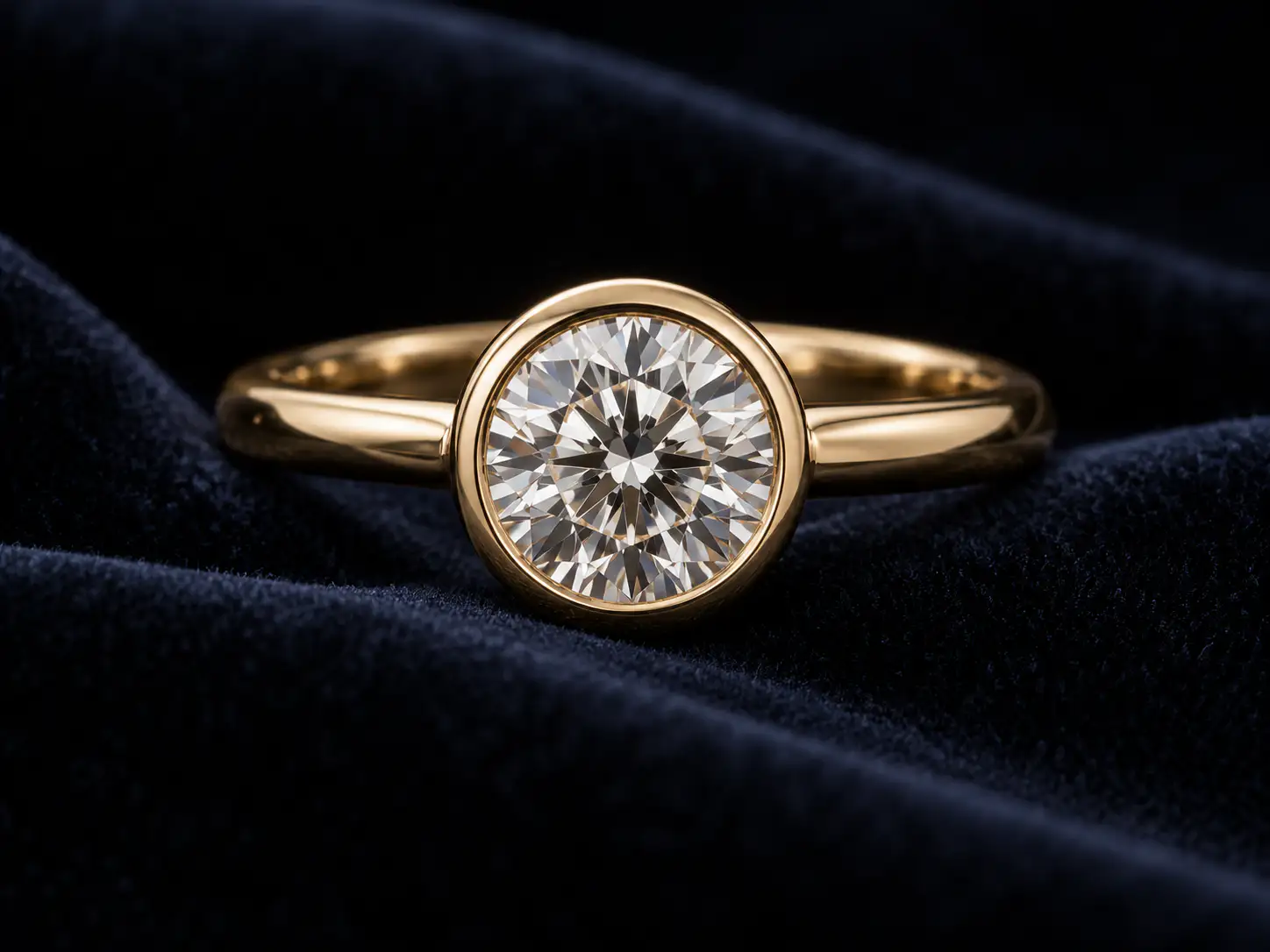
- Bezel setting. A continuous band of metal surrounds the entire girdle of the stone, providing maximum protection on all sides. A bezel-set ring catches on nothing, protects every edge of the diamond, and is the most practical choice for hands-on work, sports, or any activity where the ring will regularly contact surfaces. The tradeoff is slightly reduced light entry from the sides, but a well-cut stone in a bezel still sparkles beautifully.
- Low-set solitaire. Keeping the diamond closer to the finger reduces the leverage available for impact to act on the stone and setting. High prong settings create more exposure and more opportunity for the ring to catch on things. A lower profile is almost always a better choice for active wearers.
- Basket setting. A basket setting uses a metal framework beneath the stone to cradle and support it securely. It keeps the diamond closer to the finger than a high prong setting while still allowing light to enter from the sides, making it a practical and beautiful option for active wearers who want both protection and sparkle.
How We Approach This at The Diamond Room
As a private jeweler, we do not hand you a tray of preset rings and let you choose. We start with a conversation about how you actually use your hands every day. That context shapes every recommendation we make, from the shape of the stone to the height of the setting to the thickness of the band.
We work in platinum, 14kt gold, and 18kt gold, and we can guide you toward the metal that fits your lifestyle as well as your aesthetic. Platinum is the most durable option and resists wear better than gold over decades of active use. For clients who prefer gold, 14kt holds up better to daily impact than 18kt due to its higher alloy content.
Our custom design process is built around your life, not around existing inventory. If you want to see examples of how different settings look and wear before your appointment, our engagement rings page shows finished work across a range of styles. The Diamond Buying Guide also covers the shape and setting basics if you want to build some context first.
Book a private appointment in Austin or schedule in Dallas and we will design something that goes wherever you go.
Frequently Asked Questions
Can I wear an engagement ring every day if I have an active lifestyle?
Yes, with the right shape and setting. Many of our clients wear their rings through everything from daily workouts to outdoor work to raising young children. The key is choosing a shape without vulnerable corners or points and pairing it with a setting that keeps the stone protected and the profile low. A ring designed around your life will hold up to it.
Can a diamond chip even though it’s the hardest gemstone?
Absolutely. A diamond is a crystal with natural inclusions and cleavages. When hit at the right angle with the right force and pressure, inclusions can expand and surface, creating a chip or crack. The same goes for a diamond’s natural cleavages, which can also expand within the stone and create a crack. Hardness means a diamond resists scratching, but it does not make it immune to fracture from a sharp impact in the wrong direction.
What is the most durable engagement ring setting for an active person?
A bezel setting provides the most protection overall. The metal surrounds the entire girdle of the stone, protecting every edge and eliminating the prongs that can catch on surfaces or take impact. A low-profile bezel in platinum is about as durable as an engagement ring gets without sacrificing the beauty of the stone.
Is platinum or gold better for an active lifestyle?
Platinum is the more durable choice for heavy daily wear. It is denser and more resistant to wear over time, and it does not thin the way gold does after years of abrasion. For clients who prefer gold, 14kt holds up better than 18kt because the higher alloy content makes it harder and more scratch-resistant. The right metal depends on your lifestyle and your aesthetic, and it is a decision worth talking through during your appointment.
What happens if I chip a diamond?
A chipped diamond is not automatically a lost diamond, but the severity determines the options. Minor chips on the edge of the stone can sometimes be recut or concealed by adjusting the prong placement. More significant chips may require replacing the stone entirely. The best approach is prevention through the right shape and setting, combined with periodic professional inspections to catch any developing wear before it becomes a larger problem.
Should I take my engagement ring off during workouts or sports?
For high-impact activities, contact sports, or anything involving weights or equipment that could hit the ring directly, removing it is the safest option. A travel band or a silicone ring is a practical alternative for those activities. For lower-impact exercise like running or cycling, a well-designed low-profile ring in a durable metal is usually fine to wear. When in doubt, take it off, and we can design a setting that makes removal and storage convenient as part of your daily routine.
