
When clients start thinking about an engagement ring, the conversation usually begins with the stone. Cut, carat, lab versus natural. The metal often comes second, almost as an afterthought.
But the choice between 14kt and 18kt gold has real consequences for how the ring looks, wears, and ages over time. Here is what actually separates them.
What Karat Actually Means
Karat is a measure of gold purity. Pure gold is 24 karats, which means 100 percent gold content. In that state, it is generally too soft for the kind of secure stone settings and everyday durability expected from an engagement ring. Alloying it with other metals, such as copper, silver, nickel, or zinc, hardens the material and adjusts its color.
18kt gold is 75 percent pure gold. 14kt gold is 58.3 percent pure gold. The remainder in each case is alloy. More gold content means a richer, warmer color and a slightly softer material. Less gold content means greater durability and a lower price point.
Neither is objectively better. They are different tradeoffs, and the right choice depends on how you weigh them.
14kt Gold: The Case for Durability
14kt gold is the most common choice for engagement rings in the United States, and the reasons are practical. The higher alloy content makes it more resistant to scratching and everyday wear, which matters for a ring worn continuously for decades. It is also less expensive than 18kt, which can free up budget for the center stone or setting details.
The color difference between 14kt and 18kt is real but subtle. In yellow gold, 14kt reads slightly lighter and cooler. In rose gold, 14kt often produces a deeper, more saturated pink because of its higher alloy content. In white gold, the visible difference is often minimal, particularly when the rings are rhodium-plated to achieve a bright white finish.
If you lead an active lifestyle, work with your hands, or simply want a ring that holds up well to daily life without requiring careful handling, 14kt is a strong practical choice that still delivers a genuinely beautiful result.
18kt Gold: The Case for Richness
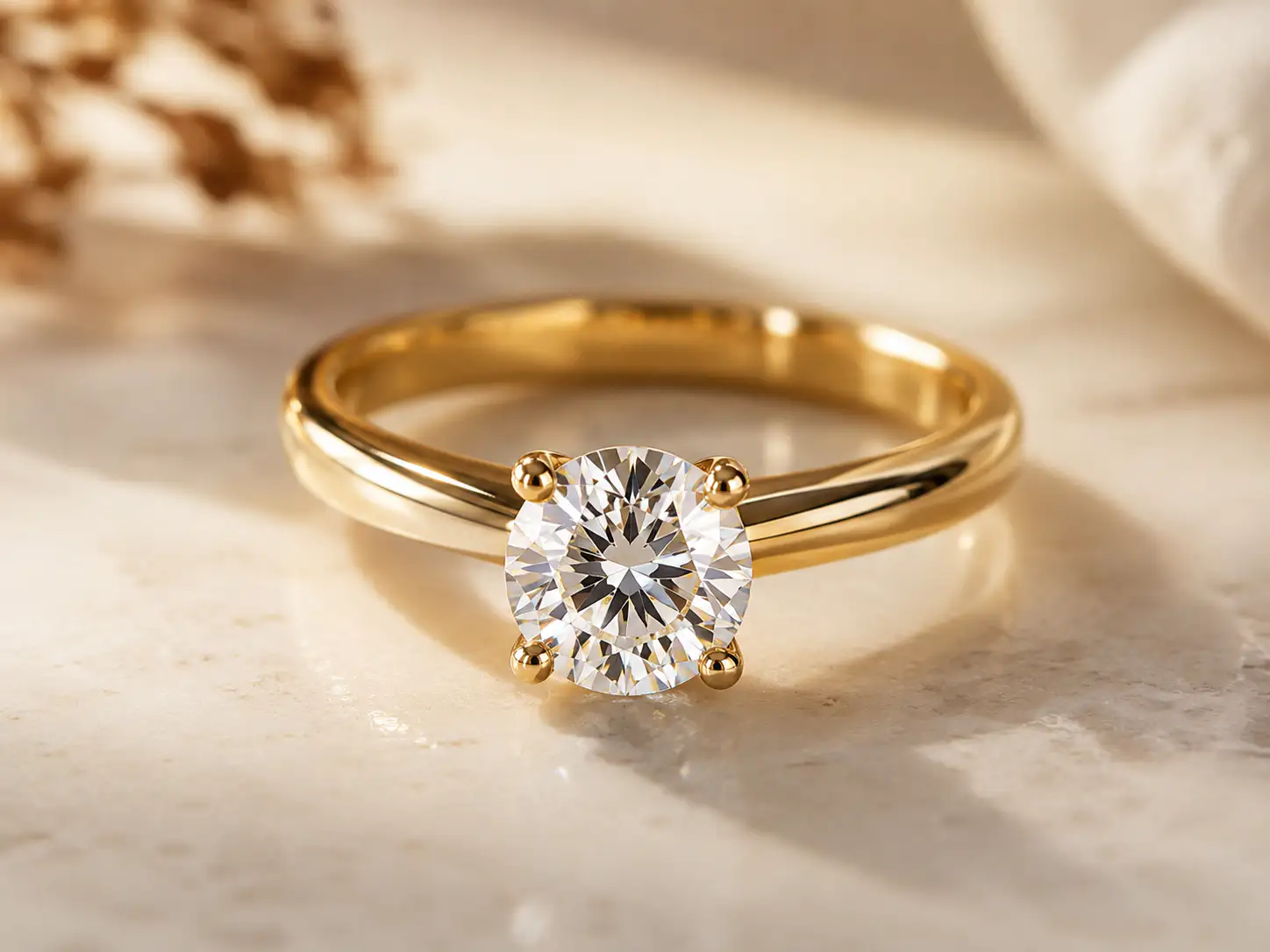
18kt gold carries more weight in hand and a noticeably warmer, richer color in yellow and rose tones. It is the standard for many high-end and European jewelry designs, and many clients find the color payoff alone worth the difference in price and the slight trade in durability.
The softness of 18kt is a real consideration. It will show fine surface scratches more readily than 14kt over time, particularly on high-polish finishes. That said, scratches on gold rings can be polished out, and many wearers find that a naturally developing patina adds character rather than detracting from the ring’s appearance.
In rose gold specifically, 18kt typically produces a softer, warmer, more blended pink hue compared with the deeper tone often seen in 14kt. Exact color can vary depending on the specific alloy used.
How the Ring Design Influences the Right Metal
Metal choice is not made in isolation from the rest of the design. The setting style, the center stone, and any accent stones all interact with the metal in ways that matter. For very delicate designs, the specific alloy, construction, stone size, and setting style can all influence which metal makes the most sense. A bold solitaire in a simple setting can showcase the richer tone of 18kt without the metal’s softness becoming a practical issue.
At The Diamond Room, metal selection is part of the custom design conversation, not a checkbox at the end of it. We look at your lifestyle, the ring design you are working toward, and how the metal interacts with your stone before making a recommendation. The goal is a ring that looks exactly right and wears well for the long term.
When you are ready to see 14kt and 18kt side by side and feel the difference in person, book a private appointment in Austin or schedule in Dallas. We will walk through the tones, the weights, and the price differences so you can make the call with confidence.
Frequently Asked Questions
Is 14kt or 18kt gold better for an engagement ring?
Neither is objectively better. 14kt is more durable and less expensive, making it a practical choice for everyday wear. 18kt has a richer color and a more luxurious feel and is often preferred for high-end designs. The right choice depends on your lifestyle, your aesthetic preferences, and how you want to balance durability against color richness.
Does 18kt gold scratch more easily than 14kt?
Yes. Higher gold content means a softer material, and 18kt will show surface scratches more readily than 14kt under the same conditions. That said, scratches on gold can be polished out during routine maintenance, and many wearers find that the color and feel of 18kt is worth the trade. If you are particularly active or hard on jewelry, 14kt is the more forgiving choice.
What is the difference between 14kt and 18kt rose gold?
Rose gold gets its pink tone primarily from copper. Because 14kt contains a larger percentage of alloy metals, it often has a deeper, more saturated pink tone, while 18kt rose gold typically appears softer and warmer. Exact color can vary depending on the specific alloy used.
If you want a bolder pink, 14kt rose may be the stronger choice. If you prefer a subtler warmth, 18kt rose may be a better fit.
Does the karat of gold affect the price significantly?
Yes, though the difference varies depending on the design and the amount of metal used. 18kt gold costs more per gram due to its higher gold content. For a simple solitaire band, the price difference may be modest. For a more substantial design with significant metal weight, the difference between 14kt and 18kt can be meaningful.
We walk through the pricing side by side during your appointment so you can weigh the tradeoff directly.
Can I mix metals in one ring, such as yellow gold and platinum?
Yes. Two-tone and mixed-metal designs are increasingly popular, and The Diamond Room builds them regularly. A common combination is a yellow gold band with platinum prongs, allowing the setting around the stone to take advantage of platinum’s strength and toughness while keeping the warm tone of the gold band. Mixed-metal designs are handled as part of the custom design process, and the proportions can be adjusted to achieve the look you are after.
